Practical travel bag tips should make shopping easier, not more complicated. Before choosing a suitcase, backpack or duffel, think about how long you will be away, what you need to carry and how much lifting or walking your journey involves.
When browsing Millano’s travel bags and luggage, look beyond colour and the size printed in the product name. Empty weight, wheel quality, handle stability, zippers, compartments and full exterior measurements are the details you will use on every trip. This guide explains how to compare them without relying on one-size-fits-all claims.
Contents
- Choose a bag for your trip
- Check six practical features
- Review current airline requirements
- Compare materials and construction
- Pack for access, balance and space
- Avoid common travel bag problems
- Travel bag questions
Travel Bag Tips for Choosing the Right Type
The most useful travel bag tips begin with the trip rather than the product. A bag that works for a short business visit may be inconvenient for a road trip, a longer holiday or an itinerary with several stops.
- One to three nights: Start with a compact suitcase or one of Millano’s backpacks. Check whether the usable space fits your clothing, shoes and toiletries. For work trips, confirm that any laptop compartment fits your device.
- Longer stays: Compare luggage with enough room for the layers or outfits you will actually use. Access to laundry may let you pack less, even for a week or more. Choose a case you can still lift when it is full.
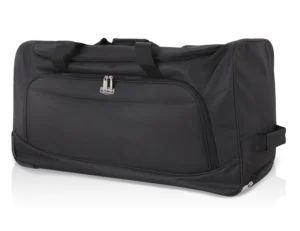
- Road trips and bulky packing: Duffel bags can be useful when you want one large main compartment. Check the dimensions and carrying options, and do not assume that a large duffel qualifies as cabin baggage.
- Trips with several stops: Think about stairs, public transport and walking distances. Compare a backpack’s loaded comfort with the effort of lifting a wheeled case.
Have a trip in mind? Shop Travel Bags at Millano and compare the features that suit your plans.
Travel Bag Tips: Six Details to Check Before Buying
Use these travel bag tips while comparing similar products. A practical inspection often tells you more than a broad description such as “premium” or “travel ready.”
1. Empty weight
Compare the empty weight of bags with similar capacity. A lighter case leaves more of any airline weight allowance for your belongings, but weight should be considered alongside the wheels, handles, shell or fabric and overall construction.
2. Wheel quality
Look for secure wheel mounts and smooth rolling and turning. If you are shopping in person, test the case with some weight inside where permitted. Ask whether replacement wheels are available and check how exposed the wheels are to impact.
3. Handle stability
Extend the telescopic handle to a comfortable height and make sure it locks in place. Check for excessive movement, then test the top and side carry handles. Lift a full case using its carry handles rather than its telescopic handle.
4. Zippers, closures and seams
Open and close every zipper, including around corners. Look for smooth movement, accessible pulls and even stitching. The bag should close without forcing the two sides together. If the bag has a lock, confirm how it works before travelling.
5. Compartments
Check whether the main opening, dividers and pockets suit the way you pack. A laptop sleeve, shoe section or quick-access pocket is useful only when it fits what you carry and remains accessible during the journey.
6. Capacity and expansion
Compare the listed capacity and full exterior measurements. An expansion zipper adds depth, so check the expanded dimensions rather than assuming that an expanded bag will still meet an airline’s limit.
Check Your Airline’s Current Carry-On Policy
One of the most important travel bag tips is to check the policy for your actual booking. There is no single carry-on size or allowance that applies to every airline, route and fare. A product name such as “20-inch” or “22-inch” does not, by itself, confirm cabin suitability.
- Check what your fare includes: A personal item and an overhead carry-on are different allowances. Some fares may include only a personal item, and route-specific conditions can apply.
- Measure the packed bag: Compare its full exterior dimensions—including wheels, handles and filled pockets—with the airline’s current limits.
- Check the weight rules: Some airlines publish a weight limit, while others require passengers to lift the bag into the overhead bin without assistance.
- Review connecting flights: If another airline operates part of the itinerary, check its rules as well.
Before departure, review the official Air Canada carry-on baggage page or WestJet carry-on baggage page. If you are flying with another carrier, use that airline’s official website. Policies and fare inclusions can change.
Travel Bag Tips for Comparing Materials and Construction
These travel bag tips help you compare construction without assuming that one material is best for every traveller. A material name is a starting point; the corners, seams, wheel attachments, handles, lining and care instructions also matter.
Hard-shell luggage
Check the material named in the product specifications, such as ABS or polycarbonate, and inspect the shell around the corners, zipper and wheel mounts. Compare flexibility, empty weight and surface finish. Different cases made from the same material can still vary in construction.
Fabric bags
Review the stated fabric, stitching, lining and reinforcement around the base and carrying points. If exposure to rain matters, look for an explicit water-resistance statement and follow the manufacturer’s care guidance. Do not assume that the main fabric, seams and zippers are waterproof.
Coated and recycled materials
Read the complete specification rather than relying on a single label. A coating or recycled-content description does not automatically establish waterproofing, durability or the product’s total environmental impact.
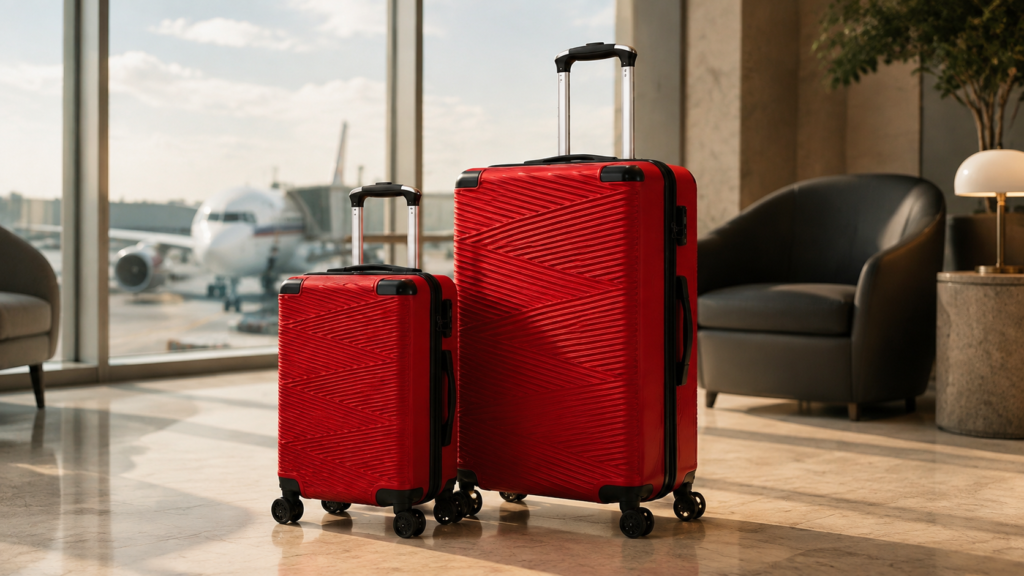
For a Millano example, the Toscano Intrecciare luggage listing identifies an ABS hard shell, detachable wheels, individual exterior measurements and the weight of each case. Product-specific details like these provide a more useful basis for comparison than general claims. Always review the current listing and warranty terms for the model you are considering.
Travel Bag Tips for Smarter Packing
Good travel bag tips should improve access and balance as well as save space. The goal is a bag that closes easily, remains manageable and keeps important items where you can reach them.
- Start with a list. Lay everything out and remove duplicate or low-use items before packing.
- Group small items. Use pouches, packing cubes or suitable travel accessories to separate clothing, cables and toiletries. Packing cubes organize items; they do not reduce their weight.
- Roll or fold to suit the item. Rolling can work well for soft garments, while structured clothing may be better folded.
- Keep essentials accessible. Store travel documents, medication and valuables in the cabin bag that will remain with you. Place toiletries in a separate leak-resistant pouch.
- Balance the load. Place heavier items low and close to the centre of a wheeled case, then secure the contents so they do not shift.
- Weigh and measure again. Check the packed bag, including any expanded sections, against the current requirements for your booking.
Travel Bag Tips for Avoiding Common Problems
Preventive travel bag tips are most useful when they address the parts of a bag that experience regular stress. A few checks before departure can reduce avoidable problems later.
- A strained zipper: Repack or remove items instead of pulling harder. A lock does not relieve pressure on an overfilled bag.
- Wheels catching on rough ground: Use the carry handles to lift the case over kerbs or steps when it is safe to do so. Avoid dragging the wheels up stairs.
- An unstable telescopic handle: Make sure the handle locks before departure and avoid using it to lift the bag.
- Difficult-to-find essentials: Give documents, keys and charging cables a consistent pocket, and keep valuables out of exposed exterior compartments.
- Dirt or dampness after a trip: Follow the manufacturer’s cleaning instructions, remove debris from the wheels and allow the bag to dry fully before storage.
Travel Bag Tips: Frequently Asked Questions
The following travel bag tips answer common questions shoppers ask when comparing luggage, backpacks and duffels.
Is there a universal carry-on suitcase size?
No. Airline, route, aircraft and fare requirements can differ. Check the current official policy for every operating airline and compare it with the packed bag’s full exterior dimensions.
Is hard-shell luggage always better than soft-sided luggage?
No single construction is best for every trip. Compare empty weight, flexibility, access, expansion, wheel and handle construction, the protection needed for your belongings and how the bag will be stored.
Do packing cubes reduce baggage weight?
No. Packing cubes can organize or compress clothing, but the contents still weigh the same. Weigh the finished bag rather than relying on how compact it looks.
Should I buy a luggage set?
A set may suit a household that uses different sizes. Check the weight, dimensions and storage needs of every piece and consider whether you will use each size. Browse Millano’s bag collection to compare alternatives.
When should a travel bag be replaced?
There is no fixed replacement schedule. Inspect the wheel mounts, carry handles, telescopic handle, zippers, seams and shell or fabric. Repair may be practical for some components; otherwise, replace a bag when damage affects safe handling or secure closure.
Final Travel Bag Tips from Millano
Keep these travel bag tips in mind when shopping: start with the length and style of your trip, then compare empty weight, wheels, handles, closures, compartments, materials and full measurements. Choose enough capacity for your plans without adding more bag than you want to carry.
Planning your next journey? Explore Luggage at Millano and compare sizes and layouts for your next trip.